
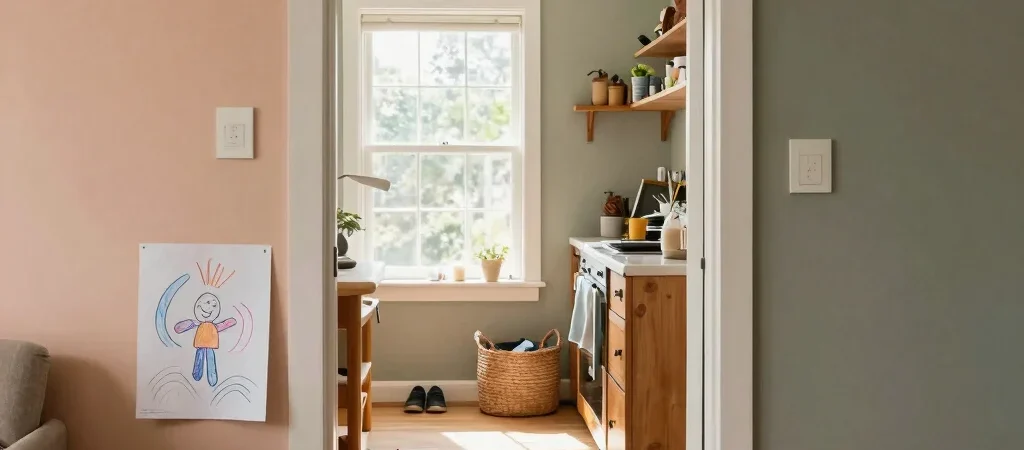
By late afternoon, a home has usually collected a record of the day. There are things to put away and things still being used, and the difference is not always obvious at a glance. We’re less interested in making every room look finished than in helping the next part of the day begin.
Give Everyday Things a Landing
A basket near the entry can catch hats, mittens, or whatever tends to travel home in pockets. A tray on the counter can corral keys and small notes before they spread across the kitchen. The best landing place is close to where the clutter happens; a beautiful container across the house won’t help much.
We also try to leave room for objects that are still part of the day. A library book waiting to be returned or a project in progress might need a visible place, not a hidden one. Making a home work well sometimes means choosing what can stay out on purpose.
Reset One Small Surface
When the rooms begin to feel crowded, we choose one surface rather than launching into a whole-house clean. Clearing the end of the table or making a little space beside the sink can change how the room feels and make dinner or tomorrow’s breakfast easier. It’s a practical reset, not a performance.
A timer can help keep the task from growing bigger than the available energy. Gather the things that belong elsewhere, wipe the surface, and stop when the time is up. The rest of the house is allowed to remain a work in progress.
Let Signs of Living Stay
Not every trace of family life needs to disappear before a room feels cared for. A child’s drawing on the fridge, a mended cushion, or a stack of books beside a chair can make a space feel more welcoming than an empty counter ever could. The aim is not to erase the day, but to make it easier to live the next one.
Try noticing which part of your home slows everyone down, then make one small adjustment there. Add a hook where bags actually land or clear a corner for the project people keep returning to. A home that holds the whole day is made through these modest, useful choices.