
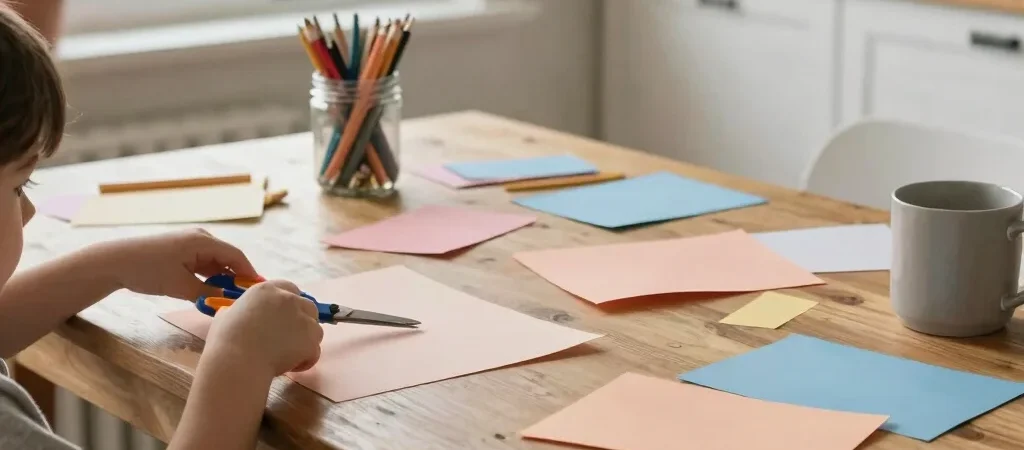
The kitchen table rarely waits for a clean slate. There might be a cup pushed to one corner, a note we meant to answer, and the evidence of lunch still hanging around when an idea takes hold. We’ve come to like making things in the middle of all that.
Start With What’s Already Here
A useful project doesn’t always begin with a trip for supplies. Cardboard from a delivery, paper saved from a package, fabric odds and ends, and a jar for pencils can get a family making before anyone has time to overthink it. Keeping a small basket of these materials within reach makes it easier to follow an idea while it’s still fresh.
We try to leave some room for the project to change shape. A paper collage might turn into a homemade card; a drawing might become a sign for the garden. That looseness is part of the fun, especially when everyone at the table has a different plan.
Make Space for Real Life
The table can be a workshop without becoming a permanent mess. We gather the things we’re using on a tray or in a shallow box, then move it aside when dinner needs its spot back. It’s a small distinction, but it makes a project feel welcome rather than like one more chore waiting to be finished.
There’s no need to tidy every mark away, either. A pencil smudge or a paper offcut can be a reminder that the room held more than one kind of work that day. Our home feels most like ours when it can make space for both.
Keep the Beginning Small
When we want to make something, we start with one reachable step: pull out the paper, sharpen a pencil, or put the scraps where everyone can see them. A modest beginning is easier to return to between the ordinary parts of family life. Sometimes that’s all an idea needs to become a project in progress.
If you’re waiting for a clear afternoon and a spotless surface, try beginning at the table you have. Set out a few materials, invite someone to join you, and see what the scraps suggest. The imperfect setup may be exactly where the interesting story starts.